

To those of you who have been readers of the blog during the past 10 years, it comes as no secret that back in 2018’ish I completely lost my photographic heart to the 65:24 format of photography. A collaboration by Fujifilm and Hasselblad back in the nineties ultimately led to the creation of the XPan / TX-1 line of cameras. I have written numerous blogposts about these cameras and the format itself, but in case you havn’t read them yet I’m linking them here


The TX-1 / XPan exposed two 35mm frames at once making the image area captured on film a whooping 65mm x 24mm. The standard lens on that system was a 45mm f/4 lens, but they also made a 90mm f/4 and a 30mm f/5.6. Albeit a very small range of lenses, they do cover almost all the practical instances that I could possibly think of shooting within the “image language” of shooting the wide screen panoramas.
But I always did wonder why they didn’t manufacture a focal length to sit in between the 45mm and the 90mm. I have always been thinking that a 60mm would’ve been perfect.
To support my reasoning behind this wish we need to talk a bit about how the focal lengths actually behave on the 65:24 cameras.
The lenses have to cover a 65mm image circle. (Pretty crazy, given their small size, since it’s basically the same image circle size as the 6×6 format used in, among others, the Hasselblad V series cameras!)
If you were to pick up a 35mm filmcamera or full frame digital sensor camera, you would need a lens significantly wider than the 45mm f/4 to achieve the same equivalent field of view, since the TX-1 / XPan format actually has a crop factor of 0.55 on its wide end. That means that to achieve a similar look on the 35mm sensor you would need a 45mm x 0.55 = 24,75mm lens.

When the 0,55 x crop factor is applied to all the focal lengths within the TX-1 ecosystem the 35mm equivalents would be as follow
- 30mm x 0,55 = 16,5 -> 16mm
- 45mm x 0,55 = 24,7 -> 24mm
- 90mm x 0,55 = 49,5 -> 50mm
As is suddenly really apparent, what I really want for the system is something right in between a 24mm and a 50mm lens.
Did someone say 35mm??
My all time favourite focal length in both APSC (23mm) and full frame! Lets do the reverse crop factor math to see what focal length would yield a similar field of view on the TX-1 / XPan as a 35mm lens on a 35mm film camera / Full frame sensor.
- 35mm x 1/0,55 = 63 -> 60mm
And there it is, no wonder that I’ve always thought that a 60mm lens for the XPan system would yield the perfect field of view for me.

Now, since the TX-1 / XPan system is longer longer being produced, obviously there will never be a 60mm option for it. Bummer! …… But wait! I actually just recently found a solution to this, albeit it’s not an analogue solution. It’s a digital solution.

Since its inception 2017 the Fujifilm GFX system has actually had the 65:24 panoramic mode available as a digital version. Fujifilm uses a panoramic crop mode on its 33x44mm sensor to yield a reduced megapixel output 65:24 format output. It works wonderfully. The jpegs are complete final crops, where as the corresponding raw files is “pre-cropped” but when imported into lightroom still retain all the info outside the cropped area. So as long as you shoot jpeg+RAW you’ll have the best of both worlds.


The now discontinued Fujifilm GFX50R (read here for my review) is built in a rangefinder brick shape as the only camera within the Fujifilm GFX ecosystem, so it’s the closest thing available on the market to the original rangefinder XPan / TX-1.
Besides trying to use Fujifilms rather large autofocus GF lenses, it seems like a no brainer to find an adapter to adapt the original TX-1 / XPan lenses.
I have had said adapter for many years, but it wasn’t until last week that I really started using it. Truth be told I had sold my GFX50R back in 2020 and replaced it with the GFX100S for all my product photography needs, but I have since regretted that move deeply. I have since sold off my GFX100S last year, and up until last week I had been “GFX-less”
But after sending a rather needy and sobbing mail to my good friends at Fujifilm Japan, they actually managed to get me a new in box GFX50R. I’m beyond grateful that they did that for me.

The minute I got the GFX50R in the house I mounted the Kipon GFX-XPAN adapter and my original Hasselblad / Fujinon 45mm f/4 lens. I have shot it almost constantly the past 10 days, and I have been loving every minute of it. But it wasn’t until yesterday that I really started wondering why I was so fond of this combo.
…And then it hit me. Obviously the 45mm f/4 is cropped on the GFX50R sensor, but how much was it actually cropped? And why did the frames that it produced fit my photographic eye so well?

The answer is obvious! The 45mm f/4 on the 33x44mm GFX sensor actually acts exactly like a 35mm on a full frame sensor, since the corresponding cropfactor is 0,79x – I did the math, and it completely checks out!
- 45mm x 0,79 = 35,5mm -> 35mm

So now I have my “Digital XPan / TX-1” – Complete with the “missing” 60mm focal length that I always wanted for the original system. I even sorta get the same shooting experience of the original TX-1 since I am using an original manual focus XPan lens. It really is the best of both worlds. For now I will continue to explore the options with this system, and luckily it won’t be as expensive in film costs as my real TX-1 😀
I know there are some of you out there thinking “why not just crop in post?” Well it goes without saying that actually composing your shot in the shooting situation will never be the same when you’re looking through a normal crop viewfinder, and then having to guesstimate what is within the 65:24 frame lines afterwards. You might get lucky from time to time, but you’ll never be able to explore the format and get consistently well-composed frames. This format requires a lot of practice if you want to produce good stringent compositions.
Now, I’m going to stress this yet again. Fujifilm NEEDS to put this format into their new high resolution 40mp generation of X-Series cameras. If the resolution of the GFX50R can handle it, so can the 40mp X-series. Could you imagine how cool it would be to be able to shoot this format with the massive range of Fujinon X-series lenses? I for one could.
—
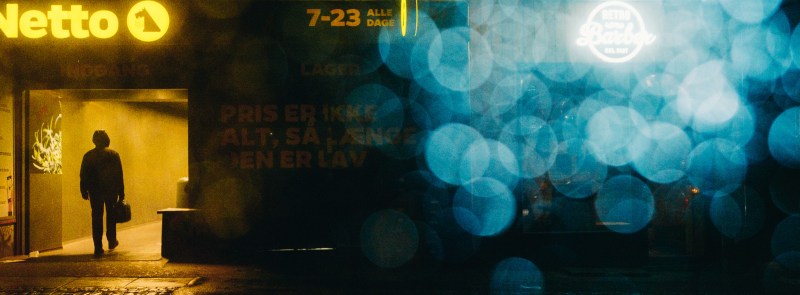
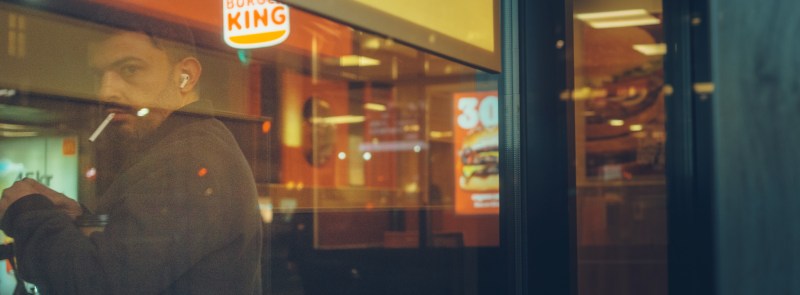
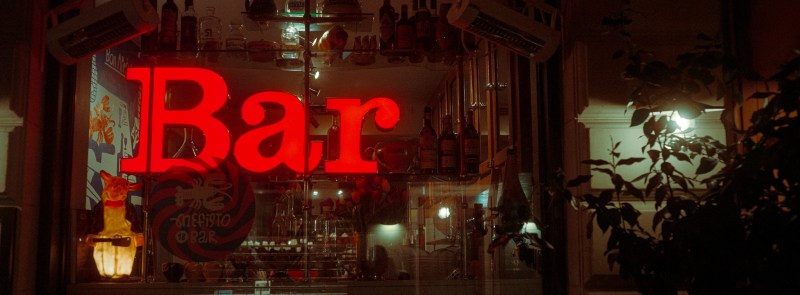
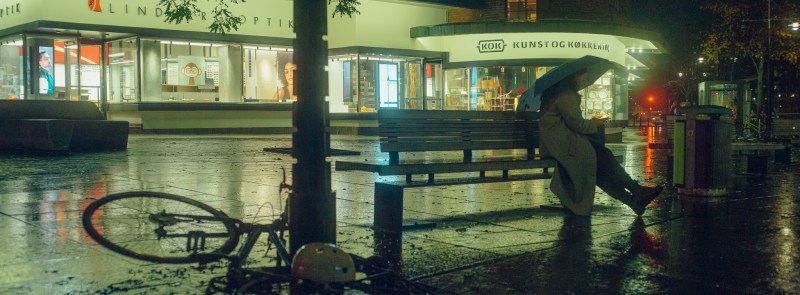
All images in the post have been shot on the GFX50R with the Hasselblad / Fujinon 45mm f/4 lens and a Tiffen Black Pro Mist 1/4 filter. The product shots have been shot on various Fujifilm cameras.






I love the format for its cinematic feel as well.
Considering getting a high resolution FF and somehow do a 65:24 mask in front of the lens.
Just like they faked keyholes and binoculars in the old filmmaking days.
Yeah. I tried that. Also with inlays in front of the sensor. Sadly it leaves much to be desired in terms of usability.
The Lumix S1R might fit the bill for you. It has a 65×24 crop mode built in and you can shoot RAW only and it will export in this format -without the need to shoot jpeg + RAW like Fuji requires. You can always revert back to 3×2 in post as all the cropped info is retained. I just checked and resolution at 65×24 (L) will get you 26 mp files.
Cheers,
Brandon
Yeah. The GFX does this as well. You don’t have to shoot JPEGs to get this crop. You can shoot raw only as well.
Why do you prefer the GFX50R over the GFX 100s ? What makes the GFX50R better in you re eye ?
The sensor of the 100s is too clinical for me. Too perfect.
The 50mp sensor from the 50R has something that I can’t explain. It just looks good to my eyes in a different way. – That, and the fact that I just like the brick shape layout of the 50R much better.
gfx 100s already has the xpan format, couldn’t you just use that? You would have also lost mpx, and part of what you define as clinicality.
The megapixel count isn’t what makes the GFX100s more clinical. There’s something about the difference in tonal rendering. I can’t really put my finger on what it is.
But is the tonal rendering “baked” in in the GFX100s RAW fiele or could we change it in Post to match the GFX50R rendering?
thinks. I have always attributed the added value of the 100s to the 16bit and how it renders the tones.
Thank you for the answer but do you mean by “thinks” it is possible to match 100s Color to 50r files color or not?
Sry, my english is not the best. 🙂
I think that, with the right profile, you can match everything you want. But, in my point of view, 16 bit are better than 14. More bit, more pixels = more and better tones.
I love panos too but find they look best when printed large. Unfortunately, there is only so much wall space.
Yeah man. I totally get what you’re saying. They’re even worse on social media platforms.
Jonas: super post and definitely has me thinking…Do you set the LV screen to one of the Pano Formats in the camera? And how does it look through the viewfinder? I guess what I am asking is how you have the camera set up for shooting. Thanks so much and great to see you posting again. I for one have taken a huge break due to overload and loss of interest and inspiration. But this, well this is nifty!
Cheers mate, Bob
Hey buddy. Yeah I set the pano-mode and then the image in both the EVF and on the back LCD is cropped with black masks top and bottom.
So glad that you’ve stuck around man. I plan to do much more blogging again. Inspiration to do so is definitely back. 💪🏼🔥
Thanks, Jonas. So, I am wondering if using the GF45mm would yield me similar results with the same settings? Finding a decent X Pan 45 is tough.
It sure would. It’s just a physically very large lens.
Yep, that is so true. Though pairing it with the pancake 50mm might me another option. Just slightly out of the “35mm” framing, but oh so close. Definitely food for thought here.
the GF50mmF3.5 R LM WR is way smaller and not that far in term of field of view
Agreed. That would be a great way to go about.
As both my wife and I are big movie fans, the movie Grand Prix directed by John Frankenheimer sent me down this path years ago as the movie was shot in cinerama (2.65 to 1), almost identical to the 65:24 (2.6666666…). For me, the eye just seems to naturally float in that frame. I became pretty dogmatic about doing almost EVERYTHING in that aspect ratio… not perfect with the X-T3 and it’s 24 megapixel size but I did get pretty good at taking two pics side by side and using LR to stitch it together. Of course your notion of a GFX camera and the 45mm is a WHOLE other level… hhmmmmm…. I am assuming the 50R versus the 50s ii is, as you state, a hand form factor preference and not a function of sensor quality? Glad you are back writing your blog have always enjoyed your thoughts and perspectives (pun intended).
That’s pretty cool Arnold! I need to watch that! – the difference between the S and R is as you say only the hand form factor. 👌🏼
You can get the sense of it in the first few minutes here…
Yeah that’s magical.
The Lumix s5 includes this crop 🙂
That’s awesome. All the more reason for Fujifilm to put it in their X series.
what a timing … i’ve been browsing the internet for 2 weeks to find a good deal on a 50R just to achieve that and cure my digital xpan disease …
Did you send a rather needy and sobbing mail to your good friends at Fujifilm Japan to ask for that 😀 ?
i’ve sent a millions mails to leica to ask for that for the leica Q3 … no answer
You bet! 💪🏼
I love cropping to the 65:24 pano format and would really love Fujifilm to add that aspect ratio to their other X series cameras, like the X100V.
Amen.
i feel that the GF35-70mmF4.5-5.6 WR was made for that game …
Agreed. 👌🏼
So much yes! I’ve been cropping to similar widw format lately and absolutely love it. And I’ve been dreaming Fujifilm would allow this crop in camera. Just a simple firmware update and done. But maybe that’s how they protect the GFX line, by keeping this option GFX only.
Also/of course – fantastic images! Thank you for sharing!
That could certainly be the case. Who knows. Thanks so much for reading along
Truly inspiring work as always Jonas! Back in the day my XPan II started me on the path to being a professional photographer and I’ve been craving one of those lenses to use on my 50R too. I’m more into cinematic portraits myself these days (I love messing about with anamorphic lenses) but I used to love the amazing light stars from the 45 and 30 lenses stopped down when shooting cityscapes…something that sadly the current wide Fuji GFX lenses can’t achieve. You may not have tested the Xpan 45 in that way but I’m wondering if that sharpness and rendering is still as good on the GFX sensor?
Thanks so much man. I totally need to try some more f/16 photography with those lenses then.
Hi Jonas,
I really like what you are showing here. Would you maybe consider posting a comparison to a Minolta 45/2, as the x-pan 45/4 is rather hard to get.
Thats a pretty good idea! I had completely forgotten about that Minolta lens. One of my old favorites.
gfx 100s already has the xpan format, couldn’t you just use that? You would have also lost mpx, and part of what you define as clinicality.
Hi, great post! Thank you. I sold my X-Pan a few years ago and have since been trying to find a digital solution. Currently I am contemplating to buy the GFX 100 II. Your post and also the one about the Techart EF to GFX adapter makes me want to make that move even more. And what great news, that I could use my Canon EF lenses on the GFX, especially since the GFX 100ii is a huge chunk of money, it means some financial savings … thank you and keep up your great work!
Very good article, thanks for the explanations of all the crop factors. XPAN is an exciting topic, unfortunately I never had the opportunity to take photos with it. I myself have a GFX100s and have never owned a GFX50R, but I have often read discussions on the topic “GFX100S is too clinical”. But most people can’t explain it, but there has to be someone who has looked at the topic professionally and explained what exactly is wrong with the GFX100s. There are people who have matched images from both cameras and almost no one has passed the blind test and could tell which image is from which GFX camera. But the GFX100s is still often referred to as “clinical” hhhmm…
I can’t explain it either. If I could have I would have. I just react to what my experience has told me over the years. It might be the right tool for everyone in the world. But if it doesn’t work for me then I’ll choose something else. Luckily there are different options for everyone out there.
Hi Jonas! I have took many pictures in one of my last trips in Bardenas Reales wit the GFX in the magical 65:24 format and they have something special… I can’t tell you but it’s something that reminds me of some 1960s movies
Today I received the Minolta 45 f2… This will be a pano-weekend with the GFX! Thank you for your article, Jonas!
Hi Jonas, the gfx (50sii) has 65:24!!??? Damn, yep, it sure has. How about that. I’m back in happy land. I’ve loved that format since your earlier articles and it’s good to see you’re back. Looking forward to more. I’ll contact you shortly about using a couple of your images in a lecture, and book I’m writhing up at the moment. Acknowledged of course. Now if I hadn’t gotten rid of all those Blads, Leicas, Rollies, 645, 69 etc etc from the old days……… oh dear.
Luckily I never sold my Tx 1 or 45 Fuji silver body and 90 Hasselblad black body lenses. Never bought the 30mm, but found a great substitute. Nikkor PC 28mm. It works a treat. I have the GFX 50S and use these lenses in pano pretty much all the time. Plus 1:1 to ‘experience’ the 500CM. I once owned Bronica ECTL so that aspect ratio is familiar. Really enjoyed your post and others comments. My favorite use case is pano on gfx using Acros simulation. That combination just strikes the right chords for me.
I actually heard about that Nikkor. Never tried it though due to lacking rangefinder coupling.
I’m hoping that you’ve asked Fuji directly for that crop to be added to the X series bodies. I’d LOVE to play with that on my X-T5. Use that relationship Jonas, we need you! lol
Oh you bet I have. MANY times. And I’ll keep going.
I so wish they would add it. It was one of the first things I checked for on the specs of the X100VI this morning. I’ve been playing with all sorts of work arounds but I think I’m going to have to bite the bullet and buy a GFX 50r or 50s ii (the lack of IBIS is the only thing that’s making hesitate with the 50r because I like night street photography). Kept hoping the Xt-5 would get the crop in a firmware release (as a developer I even looked into how feasible it would be to try to hack the firmware!!! lol
Quite funny after selling my first gfx50R for a leica SL2, i bought last week a mint 50r copy for 1600EUR (sold mine back in the day 4000) it’s truly a marvel in xpan mode with 50 lux asph close focus. As you were the one that inspired me me the first time with the article about rokkor lenses 🙂 seems we had the same process on this one..
Hi Jonas, as a long term Xpan owner/fan, and a new GF owner, this is a lovely article to read. Have you any experience shooting with the Xpan lenses without the crop? I’d be curious to know how they behave on the GF sensor, given they have such a large image circle in such a small physical package. They were obviously designed for an extreme horizontal crop, but safe to assume they’re sharp in the vertical space they’d never have been used for on the Xpan originally?
Hi Jonas,
Thank you for such a wonderful article. I wonder what is your take on using Fuji Gf 55mm on 50R. Meaning 44mm (35mm format) equivalent field of view, just as in xPAN. Understand that the lens is significantly larger than Hassleblad 45mm f/4.
So if you were to print to exhibit in this perspective, what size prints, mat, and frame would you use? It is a really interesting perspective and so different than what you typically see in an exhibit. Thanks for sharing. Love reading your blog and seeing your photos.
Great article, I’ve always been fascinated by the xpan, gives so much space in the composition.
The great thing about the format is that it’s almost like having two pictures in one and you can tell a story across the frame.
A way I use to get the framing right, on the X’s, is set the aspect ratio to 16:9 and switch on the 3×3 framing guides – then using 3×2 of the guide gives you a 2.67 aspect ratio, which just needs a slight crop to get it right. (you can also use 4:3 and half it with 6×4 guides or the level)
Hi Jonas,
I’ve also been playing with the 65:24 crop on my X cameras, by trying a 3D printed mask that goes in front of the sensor (not so good) or by using an anamorphic lens – Sirui 50mm – which, when stretched, gave the FOV of a 35mm…that was ok…
I know you’re not a Fuji ambassador anymore, but maybe you still do some product photography work for them and you still have some contacts, so…perhaps you could be the community’s voice to urge them to make the 65:24 crop mode available on X cameras, at least the higher resolution ones – although i don’t see any technical reason any of the cameras couldn’t crop to any ratio basically…
I actually sent a message to tech support at Fujifilm, asking to provide this format to 40Mp cameras as a 90th anniversary gift to their customers. It was well received by tech support. We’ll see if they like us enough to please us with a great surprise with the coming firmware update (anounced as planned for summer 2024). I’m impressed with responses I get from company representatives, so far. I never got this from the other ones I communicated with in the past. Congratulations to Fujifilm for keeping the channels open with the customers base.
Lots of interesting read here, at this day I still regret not buying an Xpan when they where «cheap» remember at some time you could get one for 20000 NOK, at that time 1 USD where around 6 NOK.
Anyway, have the 50R, did try four 28mm mf nikkor versions with a Novoflex adapter including the 28mm pc nikkor. The secret sauce where not found, even the 2.0 nikkor ais that i read raving reviews in my D700 days did not have it. Still i have a 20×55(51x150cm) print at home taken with the 50R and a 28mm Nikkor HC Auto 3.5 (latest fashion from 1972) of course its in black and white, and suitably adjusted in Silver Efex, perhaps they made something special back in the days, since the 55mm 1.2 that should not work either have its own look in 1:1 landscape, as long as its bw, god forbid color and brick walls.
And now to the initial thought : what about the 30mm GF? bought it the day it became available, great for landscapes in 24×65. its not an xpan lens, but obtainable, weather resistant, and replaceable.
Now do I sell the 50R and keep the 100 or both?
TLDR ; instead of 28mm nikkor i recommend the 30mm GF, but it looks less cool than the 28mm PC.
You are a lovely photographer, wonderful photographs, my compliment.
I am using the original GFX 50S since the first day and am very happy with it. Never had the need to go for 100MP cause they really are large for post.
I love the 65:24 format in the GFX and was wondering why Fujifilm did not implement it in the high resolution X-cameras, since it would leave us with about 25 MP (as the sensor is 3:2). Maybe you could get back at me, if Fuji is considering implementing it to the X-H2, X-T5, X100VI, please?
Ironically I had this same setup but bailed because my personal tastes for the xpan run via the 30mm and well, there’s just not a chip that’s wide enough 🙁
The Voigtlander Leica-M 21/3.5 works perfectly in 65:24 format: a bit light falloff and a bit softer in the edges, but very compact and a joy to use!
Great article. Until an affordable and more or less lightweight camera combo is available I‘m happy with my current setup for 65:24 panos…always with me iPhone 15 pro & RichieCam.
It’s a favourite format of mine also. I’m starting to use the Hasselblad X2D which offers the X-Pan format in the menu.
Is your lens calculation also correct for this? The XCD45P would seem ideal, with the 55V and 38V being very slightly either side of it but offering a better MF experience if required.
Hello Jonas,
I’ve enjoyed viewing your videos on the 65:24 format over the past weekend and seeing those fabulous images you have created.
I first came across the X-Pan format a few years ago when looking up landscape images and thinking of something between 2:1 and 3:1 ratios, as a decent starting point. At the time I was shooting 16Mp with u43 and just got into Fuji with a used X-E1, as you can imagine, shrinking those ratios down to X-Pan left me with quite small files. Now shooting exclusively Fuji with an X-T5 and still the original X-E1 (now a 590 Nm IR conversion), I have been shooting the T5 at 16:9 to give me more of an idea as to what I’m looking for (Please, please Fuji include X-Pan in to 40Mp bodies). I have recently picked up a GFX50s ii for a good price in exceptionally good condition, at present using a trio of ETR lenses 40, 75 & 150 mm with adapter and a range of OM Zuiko glass from 21 to 300mm, I would however like the ability of autofocus as well as manual, Fuji glass at present will be out of reach, so I am thinking of Canon EF glass beginning with the 40mm STM lens. I would greatly appreciate any other ideas of EF lenses to suit the 50Mp GFX sensor.
Geoff Howard
Does the 50Sii have the same images coming out of it like the 50r? Because it has the same sensor but a different processor and I specifically want to get into the GFX system for the so called „magic look“ the 50r gives but I honestly would love the IBIS and vertical flipping screen. If the images are identical in terms of colors and feel I’d got with the 50Sii but if not I’d work around the limitations of the 50r since it got the better design anyway imo. Would love to hear your thoughts on this!